

Medication reminders at home help seniors and families stay more organized with daily medication routines without replacing medical care. A non-medical caregiver can remind a client when it is time to take medication, follow the schedule already provided by healthcare professionals, encourage routine consistency and communicate concerns to family when needed. For families in Caledonia, Simcoe, Port Dover, Dunnville, Jarvis, Cayuga and Haldimand County, medication reminder support can bring peace of mind when a loved one needs gentle help staying on track at home.
What Are Medication Reminders at Home?
Medication reminders at home are non-medical support services that help a person remember their existing medication routine. This may include reminding the client when it is time to take medication, checking that the routine is being followed, helping the person stay organized and informing family members if there are concerns.
This type of support is especially useful for seniors who live alone, people recovering after illness, or individuals who have several daily routines to manage. It can also help families who worry that their loved one may forget doses, confuse timing or become overwhelmed by a complicated schedule.
Medication reminders do not mean that a caregiver is prescribing, changing or giving medical advice. The caregiver’s role is to support the routine already created by a doctor, pharmacist, nurse or qualified healthcare professional.
Why Medication Routines Can Become Difficult
Many families first notice medication routine challenges gradually. A loved one may forget whether they already took a dose, miss the correct time, become confused by different instructions, or find it difficult to stay consistent when their daily schedule changes.
This does not always mean the person cannot live safely at home. Sometimes, what is needed is a simple support system that helps them stay organized.
Medication routines may become difficult because of:
- Multiple medications with different times
- Changes after a doctor’s appointment or hospital visit
- Memory challenges or general forgetfulness
- Living alone without regular check-ins
- Changes in sleep, meals or daily routine
- Difficulty reading labels or understanding instructions
- Family caregivers being unavailable every day
- Stress, tiredness or recovery after illness
When a routine becomes confusing, families may feel anxious. A caregiver who provides non-medical reminder support can help make the day feel more structured and less overwhelming.
What Non-Medical Medication Reminder Support Can Include
Medication reminder support should always stay within safe, non-medical boundaries. The caregiver follows the schedule and instructions already provided to the client by healthcare professionals and does not make medical decisions.
Depending on the care plan, non-medical medication reminder support may include:
- Reminding the client when it is time to take medication
- Encouraging the client to follow their existing medication schedule
- Helping the client keep medication in its usual organized location
- Supporting a routine around meals, hydration and medication times
- Noticing when medication appears to have been missed
- Communicating concerns to family members
- Reminding the client about pharmacy pickups or refill discussions with family
- Encouraging the client to speak with a healthcare professional when there is confusion
The goal is to help the client stay consistent while making sure families are aware when something needs attention.
What Medication Reminder Support Does Not Include
It is important to be clear about what non-medical caregivers do not do. This protects the client, the family and the caregiver.
Non-medical medication reminder support does not include:
- Prescribing medication
- Changing medication instructions
- Giving medical advice
- Deciding whether a medication should be taken or stopped
- Explaining side effects as a medical professional would
- Replacing doctors, nurses, pharmacists or other healthcare providers
- Creating a clinical treatment plan
If there is uncertainty about dosage, timing, side effects, missed medication or medication changes, the family should contact the appropriate healthcare professional.
When Medication Reminders May Help
Medication reminder support may be helpful when families notice that a loved one is becoming less consistent with their daily routine. This support can be arranged on its own or combined with other home care services such as personal support care, companionship care, meal preparation, light housekeeping or respite care.
Your loved one may benefit from medication reminders if they:
- Frequently ask whether they have taken their medication
- Miss medication times
- Have several medications to remember
- Recently returned home after illness or hospital discharge
- Live alone and need regular check-ins
- Need reminders around meals, water and daily routines
- Become confused when medication instructions change
- Depend on family members who cannot visit every day
Families do not have to wait until the routine becomes stressful. Reminder support can be introduced early to create consistency and peace of mind.
Medication Reminder Checklist for Families
Use this checklist to decide whether your loved one may need medication reminder support at home.
| Area to Review | What Families May Notice | How Home Care Support Can Help |
|---|---|---|
| Medication timing | Your loved one forgets when medication should be taken. | A caregiver can provide reminders based on the existing schedule. |
| Daily routine | Meals, hydration and rest times are inconsistent. | A caregiver can help create a more organized daily routine. |
| Living alone | Family members are unsure whether medication is being remembered. | Regular visits provide check-ins and family reassurance. |
| Changes in medication | A new prescription or instruction has made the routine confusing. | A caregiver can remind the client to follow the updated instructions provided by healthcare professionals. |
| Missed doses | Medication appears untouched or the client cannot remember taking it. | A caregiver can notify family so they can follow up appropriately. |
| Family stress | One family caregiver is managing all reminders alone. | Home care support can reduce pressure and improve consistency. |
| Appointments and refills | Pharmacy refills or medical appointments are being forgotten. | A caregiver can provide general reminders and help families stay informed. |
How Medication Reminders Fit Into a Daily Care Routine
Medication reminders are often most effective when they are connected to a stable daily routine. For many seniors, medication times are easier to remember when they are linked with meals, morning routines, evening routines or regular caregiver visits.
For example, a morning visit may include companionship, breakfast preparation, a hydration reminder and a medication reminder based on the client’s existing schedule. An evening visit may include light housekeeping, meal support, conversation and another reminder if needed.
This kind of structure can help the day feel less scattered. It also helps families feel more confident that their loved one has support during important parts of the day.
How Caregivers Help Without Taking Over
A good caregiver supports independence wherever possible. Medication reminders should not make the person feel controlled or helpless. Instead, the caregiver provides gentle prompts and reassurance while allowing the client to participate in their own routine.
For example, the caregiver may say, “It looks like this is the time you usually take your medication,” or “Would you like to check your medication schedule?” This kind of respectful reminder helps the client stay involved.
The goal is to support the person, not embarrass them. Many seniors are more comfortable accepting reminders when they are provided kindly and consistently.
Family Communication Is Important
Medication reminder support works best when families and caregivers communicate clearly. Before care begins, families should share the medication routine that has already been provided by the client’s healthcare professionals. They should also explain what the caregiver should do if there is confusion, a missed reminder or a concern.
Families should also decide who should be contacted if questions arise. This may be an adult child, spouse, family caregiver or another trusted contact.
Clear communication helps prevent confusion. It also gives everyone a shared understanding of the caregiver’s role and the family’s expectations.
Questions to Ask Before Starting Medication Reminder Support
Before requesting medication reminder support, families may want to prepare answers to these questions:
- What time does your loved one usually take medication?
- Is the medication schedule written clearly and easy to find?
- Who should be contacted if there is confusion?
- Has a healthcare professional recently changed the routine?
- Does your loved one also need meal support or hydration reminders?
- Would morning, afternoon, evening or overnight visits be most helpful?
- Should medication reminders be combined with companionship or personal support care?
These questions can help create a safer, clearer and more practical care plan.
Medication Reminders and Other Home Care Services
Medication reminder support is often combined with other non-medical home care services. This is because medication routines are usually connected to the rest of the day.
For example, a senior may need a medication reminder but also need help preparing breakfast. Another may need companionship, light housekeeping and reminders throughout the week. A family caregiver may need respite support while still wanting someone to check in on the medication routine.
SweetHome Health Care can help families create a custom care plan that may include medication reminders along with:
- Personal support care
- Companionship care
- Meal preparation
- Light housekeeping
- Respite care
- Overnight and extended care
- Custom care planning
Combining services can make home care more complete and easier for the family to manage.
Choosing Medication Reminder Support in Caledonia
When choosing medication reminder support in Caledonia, families should look for a provider that understands both compassion and boundaries. The caregiver should be kind, dependable and respectful, while also staying within the limits of non-medical support.
Families should ask how reminders are handled, how concerns are communicated and how the care plan can be adjusted if needs change. It is also helpful to choose a provider that offers flexible care, especially if your loved one’s routine may require additional services later.
SweetHome Health Care supports families in Caledonia and nearby communities, including Simcoe, Port Dover, Dunnville, Jarvis, Cayuga and Haldimand County. Medication reminder support can be arranged as part of a broader home care plan that helps your loved one stay more organized and comfortable at home.
Frequently Asked Questions About Medication Reminders at Home
What are medication reminders at home?
Medication reminders at home are non-medical prompts that help a client remember their existing medication schedule. A caregiver may remind the person when it is time to take medication, but does not prescribe, change or give medical advice.
Can a non-medical caregiver give medication?
Non-medical caregivers provide reminders and routine support. They do not replace nurses, doctors, pharmacists or other healthcare professionals. Families should confirm medication-related instructions with the appropriate healthcare provider.
Who benefits from medication reminder support?
Medication reminder support may help seniors, people recovering after illness, individuals who live alone and families who worry that a loved one may forget medication times.
Can medication reminders be combined with other home care services?
Yes. Medication reminders can be combined with companionship, meal preparation, personal support care, light housekeeping, respite care or overnight support depending on the client’s needs.
What happens if my loved one is confused about their medication?
If there is confusion about medication instructions, dosage, timing or side effects, the family should contact a doctor, pharmacist, nurse or qualified healthcare professional. A caregiver can notify the family but should not provide medical advice.
How often can medication reminder visits be scheduled?
Visits may be scheduled based on the client’s routine. Some families need occasional reminders, while others may need daily, evening or extended care support.
Does SweetHome Health Care provide medication reminders outside Caledonia?
SweetHome Health Care supports families in Caledonia and nearby communities, including Simcoe, Port Dover, Dunnville, Jarvis, Cayuga and Haldimand County.
Request Medication Reminder Support at Home
If your loved one needs help staying organized with daily routines, SweetHome Health Care can provide non-medical medication reminder support as part of a custom home care plan. Whether your family also needs companionship, meal preparation, personal support care, light housekeeping, respite care or overnight support, the right plan can make home life more organized and reassuring.
Request care, call SweetHome Health Care or book a consultation to discuss medication reminders at home for your loved one in Caledonia and nearby communities.
Post a comment
Related Posts

July 19, 2026
Private Home Care Costs in Ontario: What Affects the Final Price?
Private home care costs in Ontario vary because every client needs a different combination of…
July 19, 2026
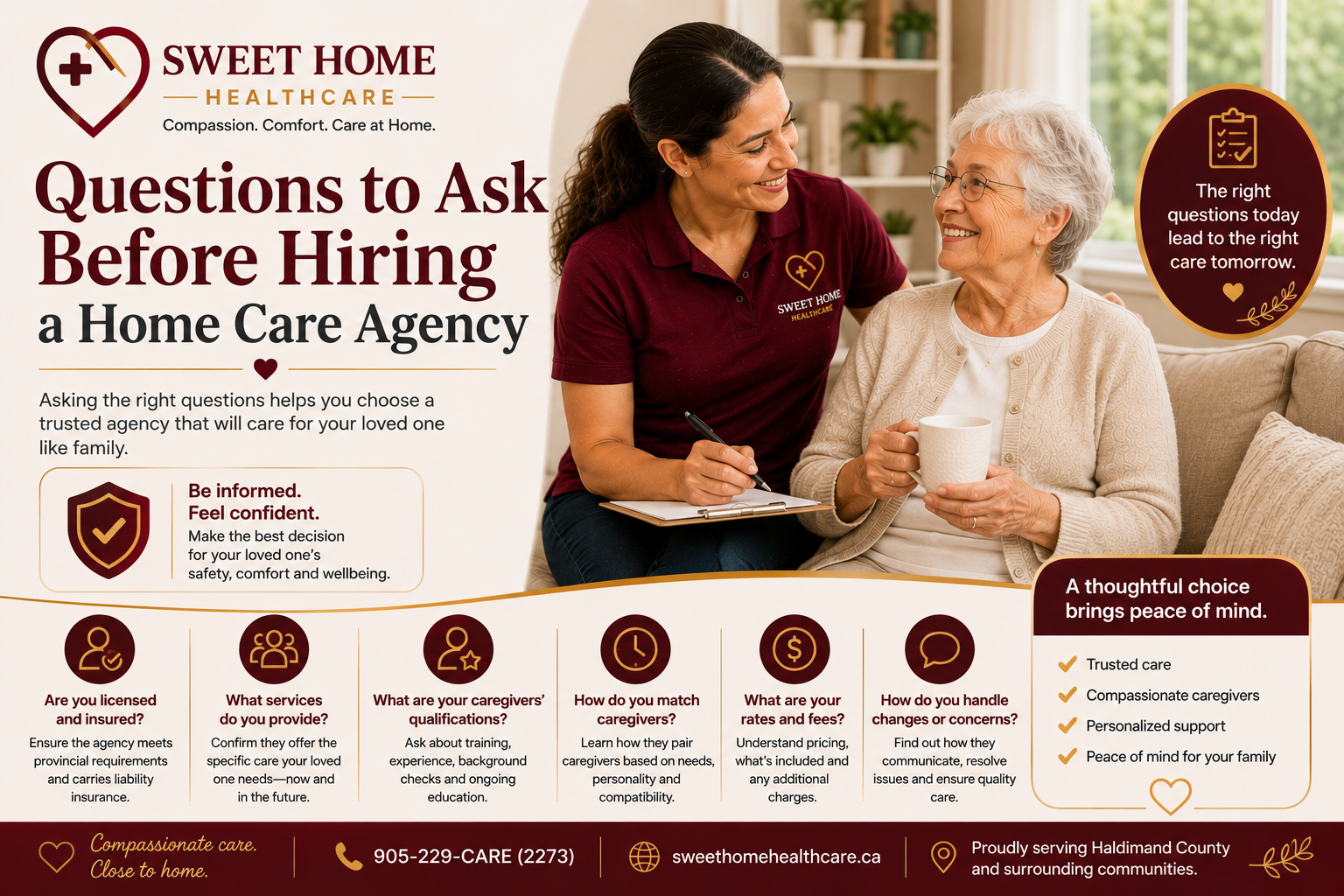
Questions to Ask Before Hiring a Home Care Agency
Before hiring a home care agency, families should ask clear questions about services, caregiver screening,…

July 19, 2026
Home Care in Haldimand County: A Family Guide to Local Support Options
Home care in Haldimand County helps seniors and adults receive practical, non-medical support while continuing…
July 19, 2026
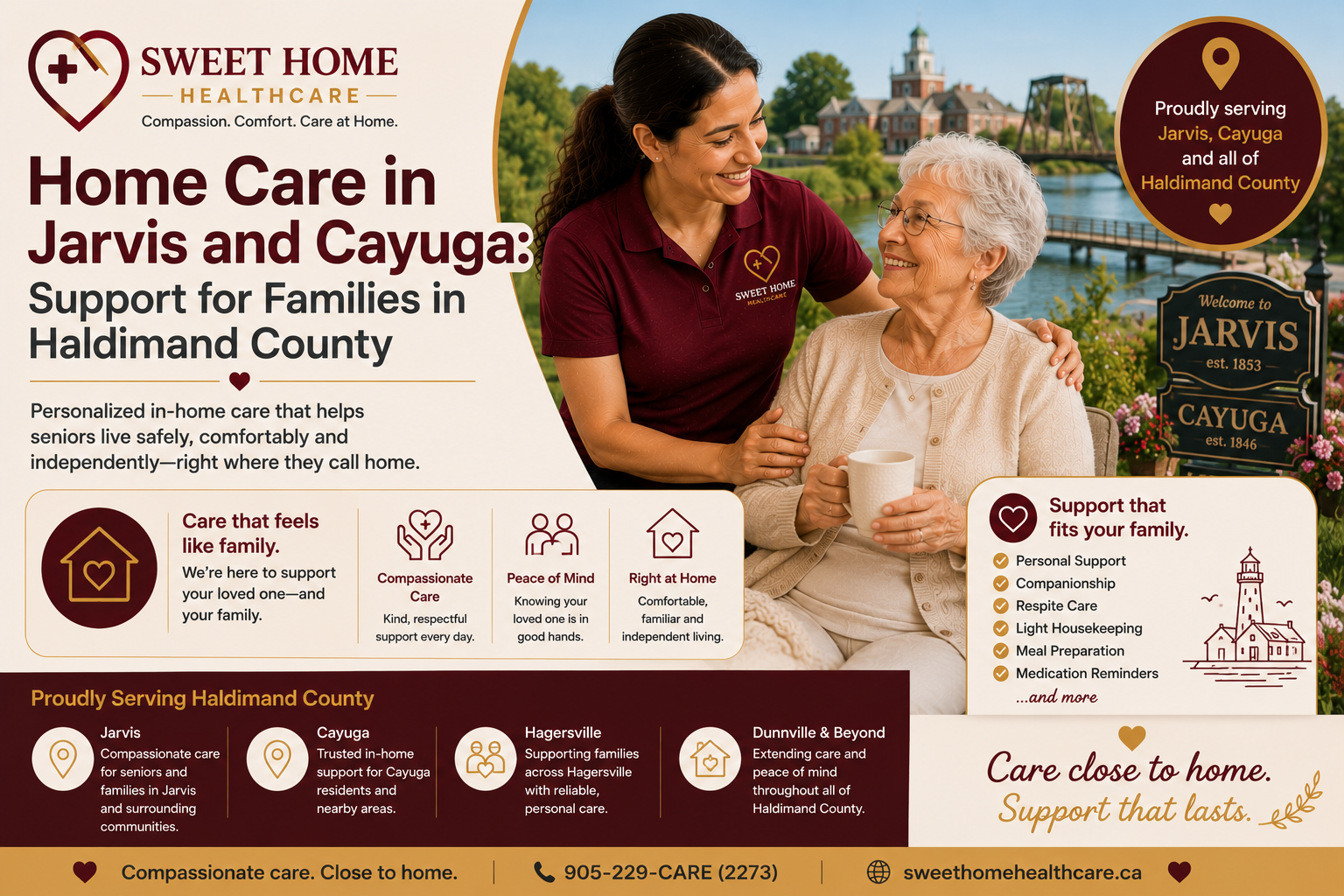
Home Care in Jarvis and Cayuga: Support for Families in Haldimand County
Home care in Jarvis and Cayuga provides flexible, non-medical support for seniors and adults who…