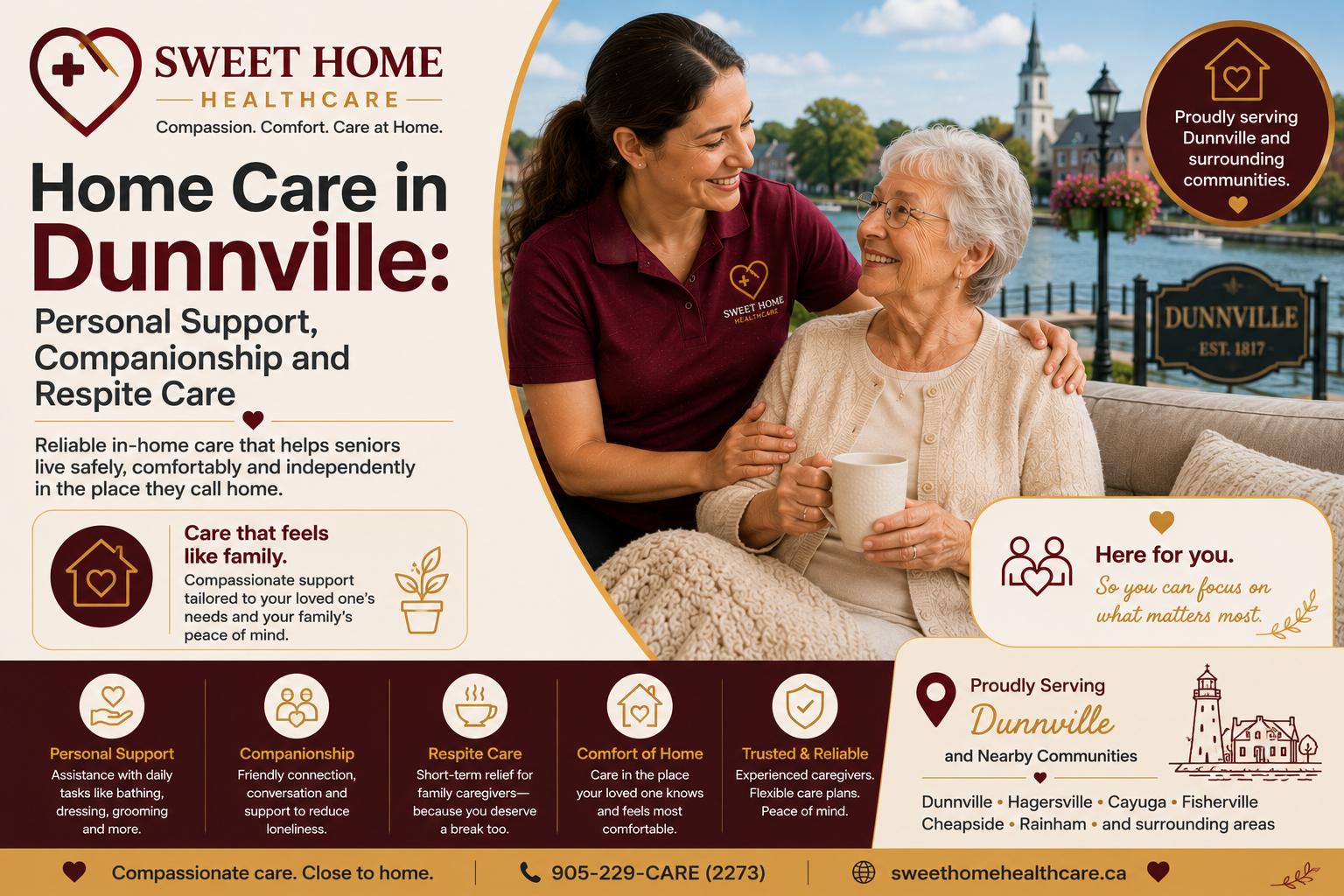


Personal support care at home helps seniors and individuals who need assistance with daily routines continue living safely and comfortably in their own homes. It may include support with bathing, dressing, grooming, mobility, meal routines, light housekeeping, companionship and general daily living assistance. For families in Caledonia, Simcoe, Port Dover, Dunnville, Jarvis, Cayuga and Haldimand County, personal support care can provide practical help while preserving dignity, independence and peace of mind.
What Is Personal Support Care at Home?
Personal support care at home is non-medical assistance provided to help a person manage everyday activities. It is especially helpful when a senior, recovering adult or loved one can still live at home but needs support with certain parts of their routine.
This type of care is not about taking control away from the person. It is about giving the right level of help so they can remain comfortable, respected and supported in the place they know best.
For many families, personal support care becomes the bridge between complete independence and more intensive care. It allows a loved one to receive help with daily needs while still enjoying the familiarity of home, personal routines and family connection.
What Does Personal Support Care Include?
The exact support depends on the person’s needs, comfort level and care plan. Some people may need help every morning. Others may only need support a few times a week. A good care plan should be flexible and built around the client’s actual routine.
Personal support care may include:
- Assistance with bathing or shower routines
- Help with dressing and grooming
- Support with mobility around the home
- Meal preparation and hydration reminders
- Medication reminders based on an existing routine
- Light housekeeping and laundry support
- Companionship and conversation
- Help organizing daily routines
- Family communication and care updates
The goal is to make daily life easier without making the person feel helpless. Respect, patience and consistency are important parts of good personal support care.
When Does Personal Support Care Help?
Families often begin considering personal support care when they notice small but important changes in a loved one’s daily routine. These changes may not seem serious at first, but over time they can affect comfort, hygiene, nutrition, safety and confidence.
Personal support care may help when your loved one:
- Finds bathing, dressing or grooming more difficult
- Needs reminders to eat, drink water or follow a routine
- Has trouble keeping the home tidy and organized
- Feels lonely or spends long hours alone
- Needs support moving safely around the home
- Has recently returned home after illness or a hospital stay
- Depends heavily on one family caregiver
- Needs help in the morning, evening or during specific parts of the day
Requesting support early can prevent family stress from building up. It can also help your loved one adjust gradually to receiving care at home.
Personal Support Care Is Not the Same as Medical Care
It is important for families to understand the difference between personal support care and medical care. Personal support care focuses on daily living assistance. It does not replace doctors, nurses, therapists or other healthcare professionals.
For example, a caregiver may remind a client to follow their medication routine, but they do not prescribe medication or give medical advice. A caregiver may help with meal preparation, but special diets or clinical nutrition needs should still be discussed with a healthcare professional.
This distinction helps families choose the right kind of support. If your loved one needs medical treatment, clinical monitoring or nursing care, you should speak with the appropriate healthcare provider. If the need is daily living assistance, comfort, routine support and companionship, personal support care may be the right option.
Daily Assistance Checklist for Families
Use this checklist to identify where your loved one may need support at home.
| Area of Support | What to Look For | Possible Personal Support Help |
|---|---|---|
| Bathing and hygiene | Bathing less often, difficulty with grooming, discomfort with personal routines | Respectful support with bathing, grooming and personal care routines |
| Dressing | Wearing the same clothes often, struggling with buttons, zippers or clothing choices | Help choosing comfortable clothing and getting dressed |
| Meals | Skipping meals, eating very little, forgetting to drink water | Meal preparation, simple snacks and hydration reminders |
| Mobility | Moving slowly, avoiding certain rooms, needing support around the home | Assistance moving safely within the home environment |
| Household routine | Clutter, laundry buildup, dishes left undone, changing linens becoming difficult | Light housekeeping, laundry and basic home organization |
| Medication routine | Missed doses, confusion about timing, family concern about consistency | Non-medical reminders based on the existing medication schedule |
| Companionship | Loneliness, reduced conversation, lack of regular social interaction | Friendly visits, conversation, light activities and reassurance |
| Family caregiver stress | One family member is doing too much and becoming tired | Regular support visits or respite care to give family caregivers relief |
How Personal Support Care Protects Dignity
One reason families delay requesting care is the fear that their loved one may feel embarrassed or lose independence. This is understandable. Personal routines are private, and many seniors do not want to feel like they are becoming a burden.
A respectful caregiver understands this. Good personal support care should be provided with patience, kindness and privacy. The caregiver should encourage the client to do what they can safely do, while providing help where it is needed.
For example, a client may be able to choose their clothing but need help putting it on. Another may be able to wash independently but need someone nearby for reassurance and routine support. The goal is not to take over. The goal is to support independence safely and respectfully.
How Personal Support Care Helps Families
Personal support care does not only help the person receiving care. It also helps the family. When loved ones are trying to manage everything alone, stress can build quickly. Adult children may be balancing work, parenting, travel, appointments and household responsibilities while also caring for an aging parent.
With reliable home care support, families can share the responsibility. A caregiver can help with daily routines, while family members focus more on emotional connection and quality time.
This can be especially valuable when family members live outside Caledonia or cannot visit every day. Regular support can provide reassurance that someone is checking in, helping with routines and communicating when something changes.
Examples of Personal Support Care Schedules
Personal support care can be arranged in different ways depending on the client’s needs. Some families need short visits. Others need longer or more frequent support.
| Care Need | Possible Schedule | Support Provided |
|---|---|---|
| Morning routine support | 2-3 mornings per week | Bathing, dressing, grooming, breakfast and light tidying |
| Daily living assistance | Daily short visits | Meals, reminders, mobility support, companionship and household routine |
| Family caregiver relief | A few hours weekly | Respite care, companionship and supervision while the family caregiver rests |
| Recovery support | Temporary support after illness | Meals, housekeeping, reminders and routine assistance while following healthcare provider instructions |
| Extended support | Longer daytime, evening or overnight shifts | More consistent assistance for clients who need longer periods of support |
The right schedule should be based on the person’s comfort, safety, routine and family priorities.
Questions to Ask Before Requesting Personal Support Care
Before starting care, it helps to prepare a few questions. This makes the consultation clearer and helps the provider recommend the right support.
- What tasks does my loved one need help with most often?
- Is support needed daily or only a few times per week?
- Does my loved one prefer morning, afternoon, evening or overnight care?
- Are there personal routines the caregiver should understand?
- Are there cultural, food, language or family preferences to consider?
- How should updates be shared with family members?
- Can the care plan change if needs increase or reduce?
These questions help create a care plan that feels personal instead of generic.
Choosing a Personal Support Care Provider in Caledonia
When choosing a personal support care provider, families should look for reliability, clear communication and a compassionate approach. The provider should take time to understand your loved one’s needs before recommending a plan.
It is also important to choose a provider that understands local families and nearby communities. SweetHome Health Care supports families in Caledonia, Simcoe, Port Dover, Dunnville, Jarvis, Cayuga and Haldimand County with flexible non-medical home care services.
Whether your loved one needs a few hours of support, regular weekly visits or a more customized care plan, the best starting point is a conversation about what is happening at home and what kind of help would make life easier.
Frequently Asked Questions About Personal Support Care at Home
What is personal support care at home?
Personal support care at home is non-medical assistance with daily living routines such as bathing, dressing, grooming, mobility, meal preparation, reminders, light housekeeping and companionship.
Who needs personal support care?
Personal support care may help seniors, adults recovering after illness or anyone who needs assistance with daily routines while continuing to live at home.
Does personal support care include medical treatment?
No. Personal support care is not medical treatment. It supports daily living and comfort at home. Medical concerns should always be discussed with a doctor, nurse or qualified healthcare professional.
Can personal support care help with bathing and dressing?
Yes. Personal support care can include respectful assistance with bathing, dressing, grooming and other personal routines, depending on the client’s needs and comfort level.
Can care be scheduled only when needed?
Yes. Care can often be scheduled based on the family’s needs. Some families may need short visits a few times per week, while others may need daily, evening, overnight or extended support.
How do I know if my parent needs personal support care?
Look for changes in hygiene, meals, mobility, housekeeping, medication routine, social interaction or caregiver stress. If daily routines are becoming difficult, it may be time to request a consultation.
Does SweetHome Health Care provide personal support care outside Caledonia?
SweetHome Health Care supports families in Caledonia and nearby communities, including Simcoe, Port Dover, Dunnville, Jarvis, Cayuga and Haldimand County.
Request Personal Support Care at Home
If your loved one needs help with daily routines, SweetHome Health Care can help your family create a personal support care plan that fits their needs, schedule and comfort level. From bathing and dressing assistance to meal preparation, companionship, medication reminders, light housekeeping and respite care, support can be arranged around what matters most at home.
Request care, call SweetHome Health Care or book a consultation to discuss personal support care at home for your family.
Post a comment
Related Posts

July 19, 2026
Private Home Care Costs in Ontario: What Affects the Final Price?
Private home care costs in Ontario vary because every client needs a different combination of…

July 19, 2026
Questions to Ask Before Hiring a Home Care Agency
Before hiring a home care agency, families should ask clear questions about services, caregiver screening,…

July 19, 2026
Home Care in Haldimand County: A Family Guide to Local Support Options
Home care in Haldimand County helps seniors and adults receive practical, non-medical support while continuing…
July 19, 2026
Home Care in Jarvis and Cayuga: Support for Families in Haldimand County
Home care in Jarvis and Cayuga provides flexible, non-medical support for seniors and adults who…